
 standoutmagazine01@gmail.com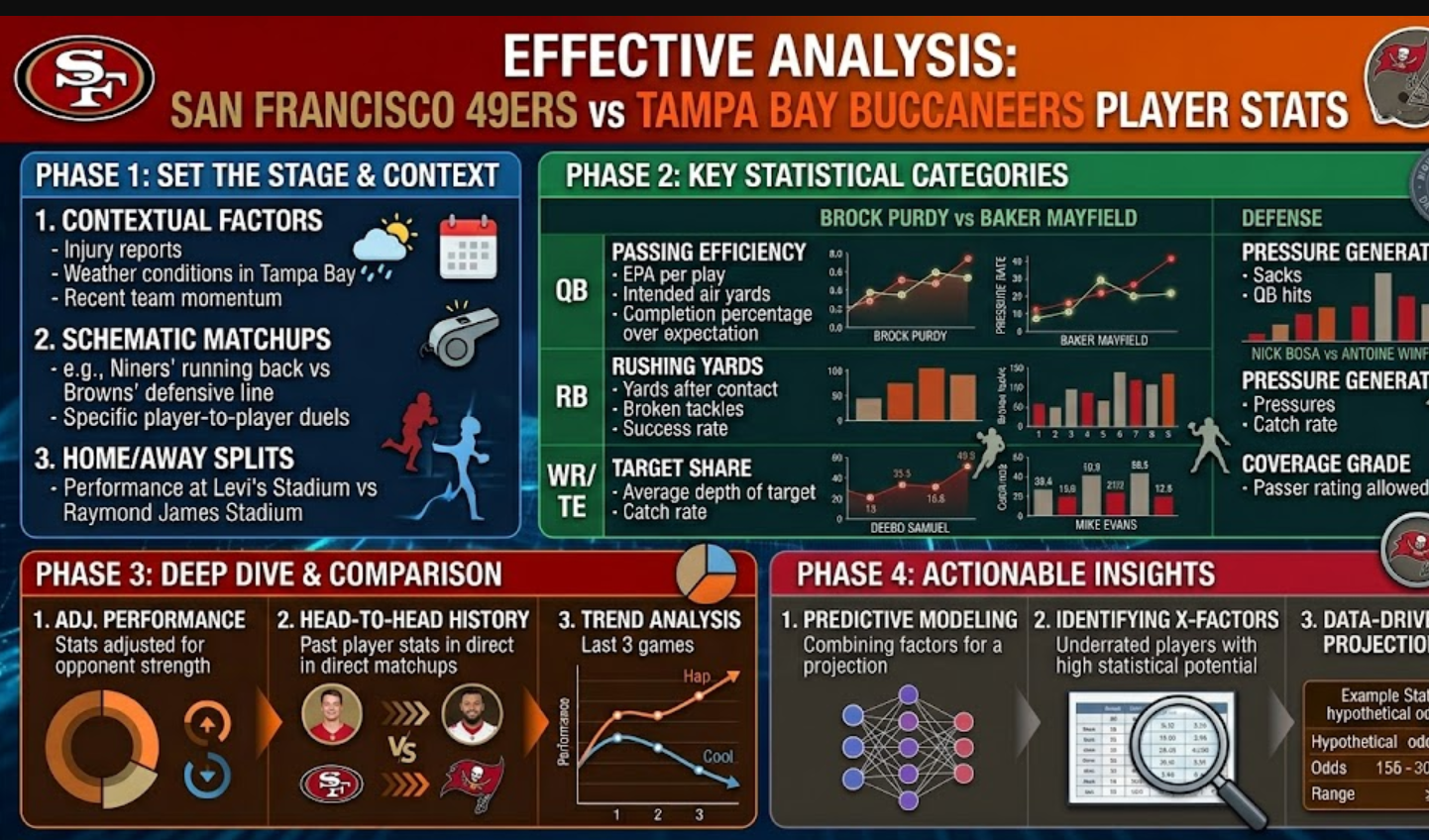
Player stats are more than just numbers on a page—they are the roadmap to understanding the dynamics of an NFL game. In matchups like the 49ers vs Tampa Bay Buccaneers, these statistics reveal which players drive offensive success, which defenders dominate the field, and how overall team strategies play out in real time. By examining stats such as passing yards, rushing attempts, tackles, and turnovers, fans and analysts can identify trends, evaluate player efficiency, and even predict future performance. Moreover, player stats provide insight into situational effectiveness, showing how teams respond under pressure, in red-zone scenarios, or on critical third downs. For coaches, these metrics guide tactical decisions, while fantasy football enthusiasts and sports bettors rely on them to make informed choices. In short, player stats are essential for translating the action on the field into actionable insights and a deeper understanding of the game.
Decoding Defensive Stats for Insights
Defense is often called the backbone of an NFL team, and analyzing defensive stats is crucial when reviewing the 49ers vs Tampa Bay Buccaneers match player stats. Defensive metrics such as tackles, sacks, interceptions, forced fumbles, and defensive touchdowns reveal which players consistently disrupt the opponent’s offense. For instance, a linebacker who leads in tackles may indicate strong run-stopping ability, while a cornerback with multiple interceptions could signal excellent coverage skills. These numbers not only reflect individual performance but also highlight team tendencies—whether a defense prefers aggressive blitzing, tight zone coverage, or a balanced approach. Understanding these patterns helps analysts predict how teams might adjust mid-game to counter offensive strengths.
Beyond raw numbers, defensive stats can uncover subtle advantages that aren’t always obvious in game footage. Metrics like pass deflections, quarterback pressures, and tackles for loss offer insight into how effectively a defense limits big plays or disrupts timing in the passing game. For example, in a 49ers vs Buccaneers matchup, if the 49ers generate high pressure on the quarterback but allow fewer rushing yards, it shows a strategic focus on pass disruption over run containment. Additionally, combining defensive stats with offensive data can illustrate the interplay between both sides of the ball—showing how a turnover or key sack shifted momentum. By carefully decoding these defensive stats, fans, coaches, and analysts gain a clearer understanding of a team’s strengths, weaknesses, and overall game impact.
Quarterback Performance Analysis
Quarterbacks are often the centerpiece of any NFL game, and analyzing their stats is essential when reviewing the 49ers vs Tampa Bay Buccaneers match player stats. Key metrics such as completion percentage, passing yards, touchdowns, interceptions, and quarterback rating (QBR) reveal not only efficiency but also decision-making under pressure. For example, a quarterback who maintains a high completion rate while minimizing turnovers indicates precise accuracy and strong game management, whereas a high number of deep passes with low completion might show risk-taking or a reliance on explosive plays. Advanced stats, like yards per attempt and pressure rates, provide even deeper insights into a quarterback’s ability to handle defensive schemes and adjust on the fly. By focusing on these stats, analysts can determine which quarterback dictated the pace, exploited defensive weaknesses, and ultimately contributed most to their team’s success.
Running Back and Wide Receiver Contributions
Running backs and wide receivers play pivotal roles in shaping the outcome of any NFL matchup, and their stats are key when analyzing the 49ers vs Tampa Bay Buccaneers match player stats. For running backs, metrics like rushing yards, yards per carry, touchdowns, and receptions out of the backfield illustrate their versatility and impact on both the ground and passing game. A running back who consistently gains positive yardage after contact not only demonstrates strength and agility but also reflects the effectiveness of the offensive line. Similarly, wide receivers are evaluated through receptions, receiving yards, catch rate, and yards after catch (YAC), which highlight their ability to create big plays and stretch the defense. By analyzing these numbers, fans and analysts can pinpoint which players consistently change the momentum of the game, whether through explosive runs, precise route-running, or clutch catches in critical moments.
Beyond individual performance, these stats also reveal team strategies and offensive tendencies. For instance, if the 49ers’ running backs accumulate high rushing yards while the Buccaneers’ receivers dominate in YAC, it indicates a strategic contrast—one team controlling the clock on the ground, the other aiming for explosive passing plays. Advanced metrics, like missed tackles forced by running backs or separation distance for wide receivers, further enrich the analysis, allowing coaches to identify mismatches and make informed adjustments. Tracking these contributions in detail not only deepens the understanding of player performance but also highlights how teamwork and coordination impact overall offensive efficiency in high-stakes matchups like this one.
Special Teams and Their Impact
Special teams often operate behind the scenes, but their performance can dramatically influence the outcome of a game, making them a crucial part of analyzing the 49ers vs Tampa Bay Buccaneers match player stats. Key metrics include field goal and extra point accuracy, punt and kickoff return yards, net punting averages, and blocked kicks. A reliable kicker can turn close games in a team’s favor, while a strong returner can shift momentum with explosive plays. For example, a Buccaneers kickoff return that sets up excellent field position or a 49ers blocked punt leading to a touchdown demonstrates how special teams can directly impact scoring and game strategy. Additionally, analyzing stats like punt coverage efficiency and touchback rates reveals which team consistently controls field position, a subtle but powerful factor in overall game management. By factoring in special teams performance alongside offensive and defensive stats, analysts gain a more complete picture of how games are truly won and lost.
Comparing Team Formations and Strategies
Understanding team formations and strategies is essential when analyzing the 49ers vs Tampa Bay Buccaneers match player stats, as these elements directly influence how players perform and which stats become meaningful. The 49ers often employ a zone-blocking scheme in their running game and use creative pre-snap motion to confuse defenses, which can affect rushing yards and passing efficiency. Conversely, the Buccaneers may rely on spread formations and high-tempo passing attacks to exploit mismatches in coverage, impacting wide receiver stats and quarterback efficiency. By comparing formations and play-calling tendencies, analysts can connect statistical outputs to strategic choices—such as why a running back may have unusually high yards on one play or why a cornerback struggles against certain receivers.
Beyond formations, strategic tendencies like third-down play calling, red-zone decision-making, and defensive blitz frequency provide deeper insight into team performance. For example, if the Buccaneers’ defense frequently blitzes, it may lead to higher quarterback pressure stats for the 49ers, influencing sack totals and hurried throws. Similarly, if the 49ers consistently use play-action passes in short-yardage situations, it can explain sudden spikes in passing efficiency or deep receptions. By examining the relationship between formations, strategies, and resulting player stats, fans and analysts can better understand the “why” behind the numbers, not just the “what,” making the analysis of games like 49ers vs Buccaneers far more comprehensive and insightful.
Using Advanced Analytics for Deeper Insights
Advanced analytics have transformed how fans and analysts interpret the 49ers vs Tampa Bay Buccaneers match player stats, going beyond traditional metrics to reveal hidden patterns and player efficiencies. Metrics like Expected Points Added (EPA), Win Probability Added (WPA), completion percentage over expected (CPOE), and defensive coverage grades provide a nuanced view of performance that raw stats cannot capture. For example, a quarterback may have modest passing yards, but a high CPOE indicates precision in high-difficulty situations, while a defensive player with strong EPA impact shows the real influence on stopping scoring drives. By integrating these advanced stats with standard metrics, analysts can identify clutch performers, matchup advantages, and strategic weaknesses, allowing for deeper insights into game dynamics. Teams, fantasy managers, and bettors increasingly rely on these analytics to make data-driven decisions, highlighting why understanding these metrics is essential for a complete and modern analysis of NFL matchups.
Conclusion and Key Takeaways
Analyzing the 49ers vs Tampa Bay Buccaneers match player stats provides a comprehensive understanding of how the game unfolded, highlighting both individual performances and team strategies. By examining offensive metrics like passing yards, rushing efficiency, and red-zone conversions alongside defensive stats such as sacks, interceptions, and pressures, fans and analysts gain a clearer picture of which players and tactics shaped the outcome. Special teams, quarterback efficiency, and contributions from running backs and wide receivers further enrich this analysis, revealing the subtleties that often go unnoticed in traditional box scores. Incorporating advanced analytics like Expected Points Added (EPA) and completion percentage over expected (CPOE) allows for even deeper insight, helping identify clutch performers and strategic advantages that can inform future matchups.
FAQs
1. Why are player stats important in NFL games?
Player stats help fans, analysts, and coaches understand individual performances, team strategies, and game outcomes. They provide insights beyond the score, showing which players influenced the game and how.
2. Which offensive stats are most crucial in a 49ers vs Buccaneers game?
Key metrics include passing yards, rushing yards, third-down conversions, red-zone efficiency, and yards after contact for running backs or receivers. These stats highlight both player performance and team strategy.
3. How do advanced analytics enhance NFL stat analysis?
Advanced metrics like Expected Points Added (EPA), Win Probability Added (WPA), and completion percentage over expected (CPOE) reveal subtle trends and situational effectiveness, showing a player’s true impact beyond raw numbers.
4. Can special teams stats really change the outcome of a game?
Yes! Metrics like kickoff and punt return yards, field goal accuracy, and blocked kicks can shift momentum, improve field position, and even directly affect the final score, making special teams a critical part of analysis.